Friday, February 14, 2014

Two new weapons in the battle against bacteria

Proteins consists of one or more chains of amino acids and essential for cell processes. Proteases, an important type of protein, cut other proteins to perform cell functions. It cuts the chain and breaks the protein apart to decompose or switch signal sequences that transport proteins in a cell. Antibiotics cannot fight them and this might lead to tuberculosis. Scientists are exploring new ways to disarm the proteases. They block the active centers of the ClpP, so-called protease, to deactivate this protease. This process works temporarily only for a couple of hours. So, they must attack all active centers of the protein. Professor Michael Groll has found two new methods to deactivate these proteases. The first mechanism changes the arrangement of amino acids, which is responsible for the cohesion of the subunits of the bacterial protease ClpP. The protease gets  broken into two parts and cannot function anymore. The second operation converts the "splitting" amino acid into another kind of amino acid. This approach can be applied to other proteases as well. These findings disrupts the metabolism of the bacterium, giving more time for the immune system to react while the formation of new resistance is decreased. These findings are promising for development in new forms of medication. 
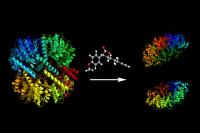
Small molecules can destruct the arrangement of the amino acids of the bacterial protease ClpP. As a result the development of new resistances can be avoided.


Themes of nature science:
1. Science is collaborative: Many researchers have worked on this project together.
2. Science is based on evidence: The scientists have collected evidence to support their new mechanisms. 
3. Science is Credible: The researchers have provided credible and understandable reasons for their findings.

For more information, visit 
http://www.biologynews.net/archives/2014/02/13/two_new_weapons_in_the_battle_against_bacteria.html

-Ashikah Mohamed

YOLO


I'm sure every person reading this has heard of the term YOLO.  Scientists did a study on aging and how it affects the pursuit of happiness.  The pursuit of happiness can be exotic travel, spending time with your family, and everything in between.  "We examine how age—and the perceived amount of time left in life—impacts the happiness people enjoy from both extraordinary and ordinary life experiences," write authors Amit Bhattacharjee (Dartmouth College) and Cassie Mogilner (Wharton School of the University of Pennsylvania).  The authors asked subjects to recall or imagine a happy experience, and hopefully be able to draw a line between ordinary and extraordinary.  In one study, with 200 participants ranging from 18 to 78, there was a strong correlation with the fact that the older the person was, the more likely that their happy experience was an ordinary event.  "Young people actively seeking to define themselves find it particularly rewarding to accumulate extraordinary experiences that mark their progression through life milestones. On the other hand, once people are older and have established a better sense of who they are, the experiences they view as self-defining are just as likely to include the routine daily events that reveal how they like to spend their time," the authors state, in conclusion.

Nature of Science Theme:  Role of motivation and curiosity.  These authors were curious about the younger generation and how they felt about pursuit of happiness.  That curiosity led them to do this experiment.

http://www.biologynews.net/archives/2014/02/11/yolo_aging_and_the_pursuit_of_happiness.html

Fish Are Beginning to Feel the Heat

Chromis swimming near coral in the Indo-Pacific
In their studies, researchers are beginning to discover survival threats of fish species near the equator. Coral reef scientists find species of fish that cannot and will not survive in water temperature changes of as little as three degrees celsius below it's current temperature. After the researchers study common fish species near the equator, they state that the fish here are adapted to a very small range of water temperatures and are most likely to perform best in those temperatures. The continually warming oceans are posing threats for the fish and putting many marine species at risk. 

As the team continues their research, they measure the rates that fish use oxygen at different temperatures while the fish are resting and while they are at their maximum performance. The researchers find that at higher temperatures, the fish lose ability to perform tasks like "evading predators, finding food, and generating sufficient energy to breed" (ARC Center of Excellence). With the increasing temperatures, scientists predict that the fish will not be able to adapt at the pace of their changing environment. Because of this, the researchers predict the fish population near the equator will drop and greatly effect human life near the equator. Since there are developing countries lying in the equatorial line that depend on the fish populations, the predicted decrease of fish poses a severe threat for the humans' food security.

NOS Themes:
-Science is collaborative
-Science is based on evidence
-Role of chance


Article Link:
http://www.sciencedaily.com/releases/2014/02/140211094304.htm

Citation:
ARC Centre of Excellence in Coral Reef Studies. "Fish living near the equator will not thrive in the warmer oceans of the future." ScienceDaily. 11 Feb. 2014.

Cities support more biodiversity than previously thought

A new study involving 147 cities worldwide is showing that these urban metropolises are more diverse than previously thought. The study found that even though there were a few species that were shared between multiple cities, the unique geographical and biological heritage of the cities was still reflected in the species present. The study highlighted the value of green space in cities, which have become very important for both native and migratory species. Findings show that many plant and animal species thrive in urban developments, even though many others decline or disappear completely. Conserving the greener areas, restoring native plant life, and adding more biodiverse urban habitats could help to support more bird and plant species. Even though cities have a tendency to cause biodiversity to fall drastically, this study shows that it is still possible for an urban setting to retain a connection to the organic world.


Science is collaborative: The study involved 147 cities worldwide.
Science is subject to debate: It was commonly assumed that cities simply destroyed biodiversity in it's entirety.

Link to the full article here.

Biological Immortality?

Biological Immortality?
By: Ben Johnson

Original Article: Here

The topic of this article is a tiny marine organism known as Hydra magnipapillata. This miraculous little creature was found to be one of the longest living organisms known to man, with a constantly low mortality rate. Unlike humans, whose mortality rate increases as the body ages, this hydra is suspected to be able to regrow any faulty or degraded cells, effectively eliminating aging as we know it. Scientists involved with this experiment concluded that if the hydra would be left in laboratory conditions, 5% of the population would still be alive in 1,400 years.

The original article is pretty short, so here are a few more that go a bit more in depth on this topic:

I am really excited to hear about this discovery and what it could mean for the future of humans. I am huge fan of using scientific discoveries for the betterment of humanity. I think this is very relatable to the stem cell debate, as they both focus on potentially mutating our cells or adding outside cells to rebuild or create new cells, tissue, organs, or even limbs. What side do you take on this debate and why?

The NOS themes I found in these three articles were:
Science is based on evidence - Evolutionary Biologist Dr. Edward Jones used over 40 control organisms to ensure accurate results
Science cannot provide complete answers to all questions - Dr. Jones, as well as other distinguished biologist working on the hydra experiments, are still not able to explain the exact process for this kind of cell regrowth


3-D Printing and Tissue Engineering


New Advance in  3-D Printing and Tissue Engineering Technology


Researchers have come up with a new micro-robotic technique for creating tissue foundation with 3D printers. This new technology is able to engineer individual cell blocks to make tissues. It could engineer organs using someone's own cells, which could help avoid issues involving organ transplants. This could also help in studying and testing cells with new medicines. This type of technology is new, yet growing very fast and has a lot of potential.

NOS themes:
  • Role of chance
  • Role of motivation and curiosity

Article Link

Cancer for seals

Cancer for seals
While this may sound alarming at first, there may be a ray of light. As temperatures warm and the poles get significantly farther away from freezing, bad things happen. In this cases diseases happen. But animals can evolve. 

This is a gray seal and as the arctic ice melts, so does their breeding ground.  To compensate, the seals must travel farther north to locate a new breeding ground. While the seals migration north may allow us more and more sightings of the seals, it also allows new opportunities for viruses and other ailments to develop. In the seals' case, their migration south to warmer waters allows them to become hosts for S. pinnipedi, a parasite that acts like cancer. This parasite is supposed to replicate in the liver until a switch is flipped. When the switch is flipped, the parasite will form cysts to infect another host.  Sadly, however, this is not the case for Gray seals. For Gray seals, the parasite just keeps going. The switch never flips and the seals' liver is eventually destroyed.
Now Gray seals are only one species of animal and saving them is only one more reason to stop global warming. But as global warming continues more and more species become infected. Beluga whales are another species battling new types of sickness. Belugas are getting bacteria commonly found in cat feces. If global warming continues there may be new meaning to "dead on the water" for most marine species.
            While this information is all sad and deadly, the grain of salt is that a different kind of seals, ringed seals, live with these bacteria.  The bacteria are still in their livers. So maybe living with disease is the new normal for marine animals. Maybe we can’t do anything to stop the growing problem of illness in these animals or reverse it.
Nos themes
-Science is subject to debate and tentative
-Science is based on evidence
-Science is collaborative

Do you think we can do anything to stop the infection?
If we can do something to stop the infection should we?